

Our Pipeline

Programs
We are focused on revolutionizing medicine by developing product candidates for a range of severe diseases leveraging CRISPR expertise and other core technologies and therapeutic approaches.
Download our pipeline
Lonvo-z
Genetic disease characterized by overproduction of bradykinin, which leads to recurring, severe and unpredictable swelling in various parts of the body
Disease Facts
~7,000
treated HAE patients in the U.S.1
7-14 days
average frequency of attacks for untreated patients2
Airway obstruction
is particularly dangerous because it can cause death by asphyxiation
Only chronic treatment options currently available
Development

Approach
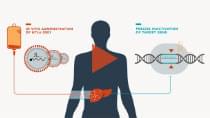
Targets the KLKB1 gene in hepatocytes

Goal
Eliminate HAE attacks for many patients with a single treatment by durably reducing plasma kallikrein activity to prevent excess bradykinin production
How it Works
Wholly Owned
1 Castaldo et al. Allergy Asthma Immunol, 2025
2 Zuraw BL. Hereditary angioedema. N Engl J Med. 2008;359:1027-1036
Nex-z
Potentially fatal disease caused by accumulation of misfolded transthyretin (TTR) protein, which affects nerves, heart, kidneys and eyes
Disease Facts
50,000
hereditary ATTR (ATTRv) patients worldwide1
~200-500K
wild-type ATTR (ATTRwt) patients worldwide2
2-15 years
typical life expectancy from onset of symptoms1
Only chronic treatment options currently available
Development

Approach
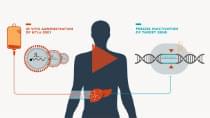
Targets the TTR gene in hepatocytes

Goal
To halt or reverse the course of disease with a single treatment by durably reducing TTR protein in patients with ATTRv and ATTRwt, both polyneuropathy and cardiomyopathy
How it Works


1Ann Med. 2015; 47(8): 625–638.
2Compiled from various sources

Nex-z
Potentially fatal disease caused by accumulation of misfolded transthyretin (TTR) protein, which affects nerves, heart, kidneys and eyes
Disease Facts
50,000
hereditary ATTR (ATTRv) patients worldwide1
~200-500K
wild-type ATTR (ATTRwt) patients worldwide2
2-15 years
typical life expectancy from onset of symptoms1
Only chronic treatment options currently available
Development
Approach
Targets the TTR gene to reduce production of TTR protein
Goal
To halt or reverse the course of disease with a single treatment by durably reducing TTR protein in patients with ATTRv and ATTRwt, both polyneuropathy and cardiomyopathy
How it Works
1Ann Med. 2015; 47(8): 625–638.
2Compiled from various sources
Clinical

Development
Approach
Insertion
Goal
Intellia and Regeneron are co-developing potential hemophilia A and hemophilia B CRISPR/Cas9-based treatments using their jointly developed targeted transgene insertion capabilities.
Partners
Notes
*** Hemophilia A program is in the research stage. Hemophilia B is being advanced by Regeneron. Intellia is eligible for milestones and royalties.
Clinical

Development
Preclinical



Development
Approach
Tissues outside the liver
Partners


Lead refers to lead development and commercial party.
1. Lonvo-z (lonvoguran ziclumeran), formerly referred to as NTLA-2002. 2. Nex-z (nexiguran ziclumeran), formerly referred to as NTLA-2001; Regeneron shares 25% of worldwide development costs and commercial profits for the ATTR program and has an option to enter into a co-promotion agreement for the U.S. commercialization. 3. Hemophilia B is being advanced solely by Regeneron; Intellia is eligible for milestones and royalties. 4. AVC-201 and AVC-203 are wholly owned by AvenCell and utilize proprietary allogeneic cell engineering technology licensed from Intellia. 5. Intellia is advancing both wholly owned and partnered programs.
