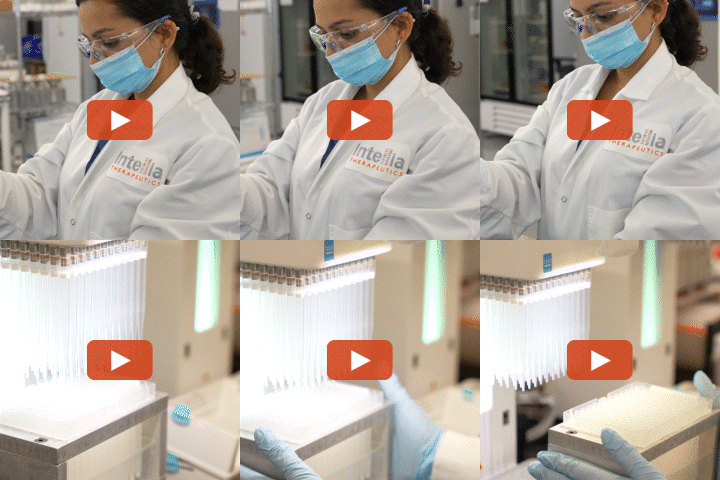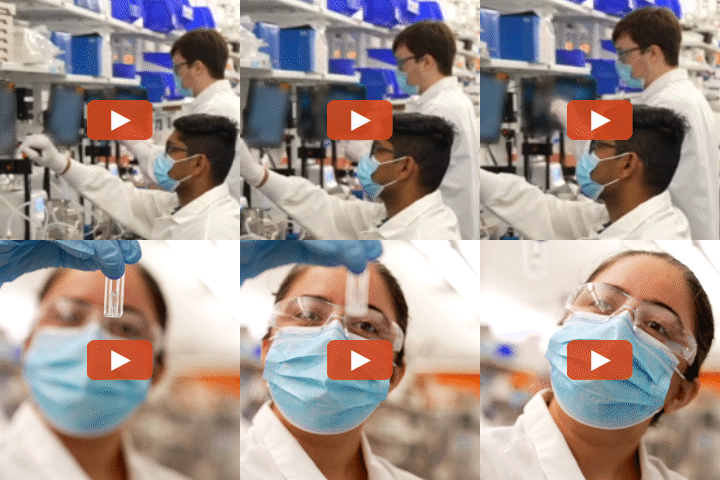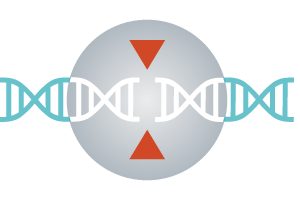

Intellia is a pioneer in the development of CRISPR/Cas9Adapted from a naturally occurring bacterial immune system, CRISPR is an acronym for Clustered Regularly Interspaced Short Palindromic Repeats. One of the proteins in the CRISPR system is known as CRISPR-associated 9 protein or Cas9 protein, which acts as a pair of ‘molecular scissors’ to cleave DNA. Researchers have co-opted the bacterial CRISPR/Cas9 system to make specific changes in the DNA of humans, other animals and plants. CRISPR/Cas9 was first harnessed in 2012 as a genome editing tool in the lab. More recently, scientists have begun engineering and testing CRISPR systems to be very specific to a desired genetic target. genome editingAlso called gene editing. Genome editing collectively refers to a set of technologies, including CRISPR/Cas9, that can be used to cut and modify DNA. Genome editing uses systems to make the DNA change inside the cell. These cells can be edited in the body (in vivo) or outside the body (ex vivo) from a patient or donor. and is focused on rapidly moving transformative therapies towards the clinic. Our company’s unique strengths include the expertise of our team in discovering and developing genomeA genome is an organism’s complete set of DNA, including all of its genes. Each genome contains all of the information needed to build and maintain that organism. In humans, a copy of the entire genome—more than three billion DNA base pairs—is contained in all cells that have a nucleus. editing products, our proprietary versatile lipid nanoparticleAlso known as LNP. LNPs are fat-based molecules that are the basis of Intellia’s CRISPR/Cas9 delivery platform. In Intellia’s experimental treatments, an LNP delivers to its target gene a simple, two-part genome editing system: the messenger RNA that encodes the Cas9 protein and the guide RNA that can target a specific DNA sequence. delivery system, and our focus on both in vivo and ex vivoAlso referred to as a cell therapy. In an ex vivo therapy, cells are removed from the body for modification. Modification is done by administering therapy directly to the cells before they are returned to the body. In the case of ex vivo CRISPR/Cas9 therapies, CRISPR/Cas9 is used to modify the extracted cells to repair them back to their proper function or add desired functions. The engineered cells are then administered to the patient so they can treat a particular disease. product development.
We are proud to count biopharmaceutical companies and leading academic institutions as partners – organizations that share our determination to revolutionize medical science.
We seek strategic collaborators to help them unlock the full potential of CRISPR/Cas9 genome editing. We scout for cutting-edge technologies that advance the application of CRISPR/Cas9 for human therapeutics and our genome editing platforms, including:
- Genome modifying technologies
- Recombination and DNAAcronym for deoxyribonucleic acid, the hereditary material in humans and almost all other organisms. DNA can be found in the cell nucleus and contains the genetic instructions for the development, functioning, growth and reproduction of all known organisms. Nearly every cell in a person’s body has the same DNA. repairCorrection of “misspelled” disease-driving DNA sequence using a CRISPR/Cas9-based gene editing therapy. technologies
- RNA therapeutic technologies
- Therapeutic delivery of nucleic acids or ribonucleoproteins – viral and chemical
- Engineered immune cell technologies
- Novel target identification
Partnering
If you are interested in exploring genome editing science and its translation into human therapies, or if your technology could advance the science, please contact us.
bd@intelliatx.com

- In December 2014, Intellia entered into a strategic collaboration and license agreement with Novartis, focusing on accelerating the development of new ex vivo CRISPR/Cas9-based therapies using chimeric antigen receptorCAR-T cell stands for chimeric antigen receptor (CAR) T cell therapy. This therapy type modifies immune cells (T cells) to express a receptor on their surface that recognizes and binds to molecules (antigens) on the surface of malignant or cancerous cells. Once the receptor binds to a tumor antigen, the T cell is activated to attack the malignant cells. T cellsType of white blood cell, or leukocyte, essential to the immune system. Intellia is engineering T cells against specific cancer antigens. and hematopoietic stem cells (HSCs). View Press Release
- In December 2018, Intellia and Novartis expanded their cell therapyType of therapy where engineered cells are transferred into a patient’s body to grow, replace or repair damaged tissue, or perform another desired function. Cells used in these therapies may originate from the patient (autologous cells) or from a donor (allogeneic cells). A common type of cell therapy is blood transfusions, where red blood cells, white blood cells and platelets from one or more donors are transferred into the body of a patient. collaboration to research ex vivo CRISPR/Cas9-based cell therapiesType of therapy where engineered cells are transferred into a patient’s body to grow, replace or repair damaged tissue, or perform another desired function. Cells used in these therapies may originate from the patient (autologous cells) or from a donor (allogeneic cells). A common type of cell therapy is blood transfusions, where red blood cells, white blood cells and platelets from one or more donors are transferred into the body of a patient. using certain ocular stem cells. View Press Release
- The collaboration portion of the agreement ended in December 2019, with each party continuing to advance selected programs after the collaboration term. Unselected rights reverted to Intellia.
- In March 2020, the U.S. Food and Drug Administration (FDA) accepted an Investigational New Drug (IND) applicationAlso known as an IND or IND application. Companies like Intellia submit an IND to begin testing of investigational therapies in humans in the U.S. An IND is equivalent to a CTA, the regulatory application required in many countries outside the U.S. to begin clinical testing. submitted by Novartis for a sickle cell disease treatment. This therapeutic candidate is based on genome editing of HSCs, using CRISPR/Cas9 RNA guides identified through Intellia’s cell therapy research collaboration with Novartis. Intellia is eligible to receive additional downstream success-based milestones and royalties. View Press Release
- In parallel with its ex vivo collaboration with Novartis, Intellia has been advancing its wholly owned ex vivo pipeline of immuno-oncology and autoimmune cell therapies.

- In April 2016, Intellia entered into a license and collaboration agreement with Regeneron. Under the agreement, the companies are researching, developing and commercializing CRISPR/Cas-based therapeutic products primarily focused on genome editing in the liver. Intellia and Regeneron are also researching and developing novel technologies and improvements to CRISPR/Cas technology to enhance our therapeutic genome editing platform. View Press Release
- In June 2020, Regeneron and Intellia expanded and extended their collaboration by two years, from 2022 to April 2024, with Regeneron having an option to extend by two more years after that. In connection with this collaboration expansion, Regeneron paid an additional $100 million through a $70 million upfront cash payment and $30 million equity investment. View Press Release
- As part of the updated 2020 agreement, Intellia and Regeneron are co-developing potential hemophilia A and BSevere, rare genetic bleeding disorders, each caused by a different missing or defective clotting protein. CRISPR/Cas9-based treatments using their jointly owned targeted transgeneA gene introduced into the genome by artificial (e.g. not found in nature) means. To perform targeted gene insertion, a transgene must be delivered to the cell nucleus and once there, fulfill the intended role of the gene, such as restoring protein production or recognizing an immune antigen. insertionInsertion of a new DNA sequence into the genome to manufacture a desired protein using a gene editing technology, such as the CRISPR/Cas9 system. capabilities. Regeneron is leading development for both hemophilia A and hemophilia BSevere, rare genetic bleeding disorders, each caused by a different missing or defective clotting protein. development programs.
- Under the terms of the original 2016 agreement, Regeneron had the exclusive right to discover and develop CRISPR-based therapeutic products against up to 10 target genes, focused primarily on editing genes in the liver. In June 2020, Regeneron gained rights to develop five additional in vivoMeaning “within the living”, this type of therapy is administered directly into the patient, targeting the cells and editing the genome from inside the body. liver targets, increasing their target cap to 15 (excluding the hemophilia A and BSevere, rare genetic bleeding disorders, each caused by a different missing or defective clotting protein. programs being co-developed by Regeneron and Intellia). Intellia may receive milestones and royalties for in vivo targets developed by Regeneron alone, and share proportionally on any profits generated by co-developed in vivo products.
- Intellia’s first in vivo product candidate, NTLA-2001, seeks to treat transthyretin (ATTR) amyloidosisAlso known as ATTR. A rare genetic disease caused by accumulation of misfolded transthyretin (TTR) protein, which affects the nerves, heart, kidneys and eyes. Patients can develop amyloidosis by inheriting the faulty TTR gene from a parent (hereditary or ATTRv) or due to a natural form of this protein, without genetic mutation (wild-type or ATTRwt). NTLA-2001, Intellia’s first investigational therapy, is being evaluated in a Phase 1 clinical trial as a treatment for people who have hereditary ATTR with polyneuropathy.. NTLA-2001 is part of a co-development/co-promotion agreement between Intellia, the lead development and commercialization party, and Regeneron. As the lead party, Intellia announced in November 2020 that the first patient had been dosed in the company’s Phase 1 study, which is evaluating NTLA-2001 for the treatment of hereditary transthyretin amyloidosisAlso known as ATTR. A rare genetic disease caused by accumulation of misfolded transthyretin (TTR) protein, which affects the nerves, heart, kidneys and eyes. Patients can develop amyloidosis by inheriting the faulty TTR gene from a parent (hereditary or ATTRv) or due to a natural form of this protein, without genetic mutation (wild-type or ATTRwt). NTLA-2001, Intellia’s first investigational therapy, is being evaluated in a Phase 1 clinical trial as a treatment for people who have hereditary ATTR with polyneuropathy. with polyneuropathyATTR resulting in severe and permanent peripheral nerve damage, and manifested through symptoms that include tingling and numbness in legs and feet, difficulty walking, limb weakness and pain. Polyneuropathy is also known as peripheral neuropathy. Intellia’s first therapeutic candidate, NTLA-2001, is being studied in the clinic as a single-course treatment for hereditary transthyretin amyloidosis with polyneuropathy (ATTRv-PN). (ATTRv-PN). Once safety and an optimal dose have been determined, Intellia intends to further evaluate NTLA-2001 in a broader ATTRAlso known as ATTR. A rare genetic disease caused by accumulation of misfolded transthyretin (TTR) protein, which affects the nerves, heart, kidneys and eyes. Patients can develop amyloidosis by inheriting the faulty TTR gene from a parent (hereditary or ATTRv) or due to a natural form of this protein, without genetic mutation (wild-type or ATTRwt). NTLA-2001, Intellia’s first investigational therapy, is being evaluated in a Phase 1 clinical trial as a treatment for people who have hereditary ATTR with polyneuropathy. patient population. Beyond receiving authorization in the U.K. to initiate this trial, Intellia is submitting additional regulatory applications in other countries as part of its global clinical development plans.
- Intellia’s hereditary angioedemaAlso known as HAE. Rare and potentially life-threatening genetic disease characterized by overproduction of bradykinin, which leads to recurring, severe and unpredictable swelling in various parts of the body. (HAE) program is subject to an option by Regeneron to enter into a Co/Co agreement, under which Intellia would remain the lead party. Intellia expects to submit an INDAlso known as an IND or IND application. Companies like Intellia submit an IND to begin testing of investigational therapies in humans in the U.S. An IND is equivalent to a CTA, the regulatory application required in many countries outside the U.S. to begin clinical testing. or IND-equivalent for NTLA-2002 for the treatment of HAE in the second half of 2021.
- As of June 2020, Regeneron also has a royalty-bearing, non-exclusive license to certain Intellia intellectual property (IP) to independently develop and commercialize up to 10 ex vivo CRISPR/Cas9 products limited to defined cell types. Intellia’s license to Regeneron does not include access to IP directed to NTLA-5001, Intellia’s wholly owned development candidate for the treatment of acute myeloid leukemiaAlso known as AML. Cancer of the blood and bone marrow that is rapidly fatal without immediate treatment, and is the most common type of acute leukemia in adults. (AMLAlso known as AML. Cancer of the blood and bone marrow that is rapidly fatal without immediate treatment, and is the most common type of acute leukemia in adults.), or other IP directed to Intellia’s ex vivo targets, programs or proprietary cell engineering processes.

- In June 2017, Intellia entered into a three-year research collaboration, option and license agreement with Ospedale San Raffaele (OSR) to engineer optimized T cell-based cancer therapies. View Press Release
- The collaboration has resulted in Intellia’s first ex vivo development candidate, which is a T cellType of white blood cell, or leukocyte, essential to the immune system. Intellia is engineering T cells against specific cancer antigens. therapy for acute myeloid leukemiaAlso known as AML. Cancer of the blood and bone marrow that is rapidly fatal without immediate treatment, and is the most common type of acute leukemia in adults. targeting the Wilms’ Tumor protein (WT1Also known as WT1. Protein that in most AML cells and also in a variety of solid tumors is expressed at levels high above normal expression levels. This overexpression makes WT1 an attractive tumor target. NTLA-5001 utilizes a TCR-directed approach to target the WT1 intracellular antigen for the treatment of AML.). In December 2019, Intellia exercised its option to obtain an exclusive license to OSR’s intellectual property developed under the collaboration, including patent applications directed to WT1-specific T cellType of white blood cell, or leukocyte, essential to the immune system. Intellia is engineering T cells against specific cancer antigens. receptors.

- In June 2020, Intellia and Teneobio, Inc. announced a research collaboration and licensing agreement to use Teneobio’s Heavy Chain Antibodies (UniAbs®) for Intellia’s next-generation engineered cell therapies. In addition, Teneobio will use its proprietary platforms to discover novel UniAbs® against targets that can be used in engineered cell therapies for various life-threatening diseases. Intellia will have the option to exclusively license the novel antibodies for global development and commercialization. View Press Release

- In July 2020, Intellia and GEMoaB announced a research collaboration and license agreement to conduct joint research to combine GEMoaB’s proprietary RevCAR technology platform with Intellia’s proprietary genome editing technologies to discover and develop next-generation allogeneicCell therapy comprising immune cells collected from healthy donors, rather than the patient, and then modified ex vivo (or outside the donors or patient’s bodies) to restore their function or add therapeutic properties, for example, to target specific cancer cells. After modification, cells are administered to the patient. cellular immunotherapies for hard-to-treat cancers and inflammatory diseases. The companies will focus on immunotherapies directed against a selected number of targets. View Press Release
- Under the terms of the agreement, GEMoaB will receive payments for each product based on target reservation and selection, achievement of regulatory, clinical and commercial milestones as well as tiered royalties based on net sales. Intellia will lead the research collaboration, and be responsible for clinical development and commercialization.